

Traffic Stops Based on License Plate Checks
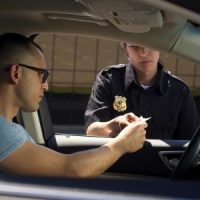
The legality of traffic stops involves a driver’s Fourth Amendment rights. The Fourth Amendment of the US Constitution protects individuals against unreasonable searches and seizures. Over time, the US Supreme Court has heard a wide range of cases concerning traffic stops and a person’s Fourth Amendment rights. Under various case law, law enforcement officers are required to have “reasonable suspicion” to make a traffic stop, and “probable cause” to conduct a search of the vehicle without a warrant. Generally speaking, what this means is that a law enforcement officer must have “reasonable suspicion” that a motorist has violated the law.
Can the police have valid “reasonable suspicion” if you are driving another person’s vehicle, the police run a license plate check, and that check shows a problem with the vehicle owner’s license that would give the officer reasonable suspicion to make a stop? In short, the answer is yes. This issue arose in the case Kansas v. Glover (2020), and our Indianapolis criminal defense attorneys can explain in more detail.
Facts of Kansas v. Glover
In Glover, a deputy sheriff ran a license plate check on a pickup truck owned by Glover. That check revealed that Glover’s license was revoked. The deputy sheriff then stopped Glover’s pickup truck under the assumption that Glover was driving the pickup truck (unlawfully, with a revoked driver’s license). Glover was indeed driving and faced subsequent charges related to driving with a revoked license.
Glover argued that the deputy sheriff did not actually have reasonable suspicion — required under the Fourth Amendment to make the warrantless stop — because the deputy sheriff did not have evidence that Glover was the one driving the pickup truck.
Supreme Court Says There Was Reasonable Suspicion
The Supreme Court ruled that, “when an officer lacks information negating an inference that the owner is driving the vehicle, an investigative traffic stop made after running a vehicle’s license plate and learning that the registered owner’s driver’s license has been revoked is reasonable under the Fourth Amendment.”
The Court reasoned that the level of suspicion of criminal activity for “reasonable suspicion” is actually quite low and “depends on the factual and practical considerations of everyday life on which reasonable and prudent men, not legal technicians, act.” The Court further reasoned that law enforcement officers must be permitted to have reasonable suspicion to stop a vehicle based on “commonsense judgments and inferences about human behavior.”
Contact Our Indianapolis Criminal Defense Lawyers Today for Assistance with Your Case
If you are facing criminal charges for an offense under Indiana law, and the charges resulted from an arrest during a traffic stop, it is critical to get in touch with an experienced Indianapolis criminal defense attorney at Rigney Law LLC to discuss the details of your case. You have constitutional rights during a traffic stop, and law enforcement officers cannot violate your Fourth Amendment right against unreasonable search and seizure. Even though the Supreme Court’s decision in Glover suggests that law enforcement officers have some leeway in terms of the determination of the reasonableness of a stop, it is critical to find out if your Fourth Amendment rights may have been violated. A constitutional violation can be a reason for the prosecution to drop charges against you or to limit the evidence that can be used against you. Contact our firm today to begin working with an experienced criminal defense lawyer in Indiana.
Sources:
Kansas v. Glover, 574 U.S. 54 (2020)
supreme.justia.com/cases/federal/us/589/18-556/