

Can Police Require Me to Wait for a Drug-Sniffing Dog During a Traffic Stop?
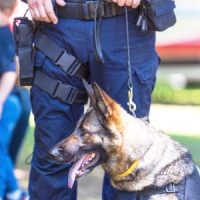
If you are stopped in your vehicle by the police or another law enforcement agency in the Indianapolis area, it might feel like you are stopped on the shoulder of a road or highway for a lengthy period of time. The police can keep you stopped lawfully while they run the information contained on your driver’s license or your license plates. They can also keep you while they conduct what they believe to be a lawful search of your automobile. But what are your rights during a traffic stop when the police want you to wait until a drug-sniffing dog can arrive on the scene? How long can the police require you to wait before potentially violating your constitutional rights?
This is a question that the US Supreme Court considered in the case Rodriguez v. United States (2015). In short, after the length of time of a reasonable traffic stop and in which all matters in the traffic stop have been handled, requiring a motorist to wait for a K-9 unit or drug-sniffing dog is a violation of that motorist’s rights against unreasonable search and seizure under the Fourth Amendment. Our Indianapolis criminal defense lawyers can explain this case in more detail and how it applies to your rights during a traffic stop in Indiana.
Understanding the Facts of Rodriguez
In Rodriguez, a motorist (Rodriguez) was stopped by a law enforcement officer for driving on the shoulder of a highway. During the stop, the law enforcement officer kept Rodriguez stopped while he checked Rodriguez’s driver’s license and his passenger’s driver’s license, and ultimately issued Rodriguez a warning. The law enforcement officer then asked Rodriguez if he would consent to having a drug-sniffing dog walk around his vehicle. Rodriguez said no. However, the law enforcement officer nonetheless continued to detain Rodriguez while he waited for his drug-sniffing dog to arrive. When the dog arrived, the dog alerted, the law enforcement officer conducted a search of the vehicle and found methamphetamine, and Rodriguez was arrested and charged.
A lower court considered the wait time for the drug-sniffing dog to be a “de minimus intrusion.” However, the US Supreme Court reversed and ruled that “extending a routine traffic stop to conduct a dog sniff is unconstitutional as an unreasonable seizure under the Fourth Amendment unless there is a reasonable suspicion of criminal activity.”
Implications of Rodriguez in Indianapolis Traffic Stops
Simply put, once the law enforcement officer has detained you for a length of time that is reasonable for a traffic stop and to conduct any necessary business (such as running your driver’s license and issuing a warning or a ticket), legally, you must be allowed to leave. If you are detained further, the law enforcement officer may be violating your Fourth Amendment rights.
Contact One of Our Indianapolis Criminal Defense Lawyers Today
Were you stopped in a traffic stop and then required to wait for an extended period until the law enforcement officer could get a drug-sniffing dog on the scene? Without reasonable suspicion of criminal activity, the extended detention may have been a violation of your constitutional rights. One of the experienced Indianapolis criminal defense attorneys at Rigney Law LLC can discuss the details with you, and whether this constitutional violation may allow for a dismissal of the charges against you. Contact us today for more information.
Sources:
Rodriguez v. United States, 575 U.S. 348 (2015)
hsupreme.justia.com/cases/federal/us/575/348/